


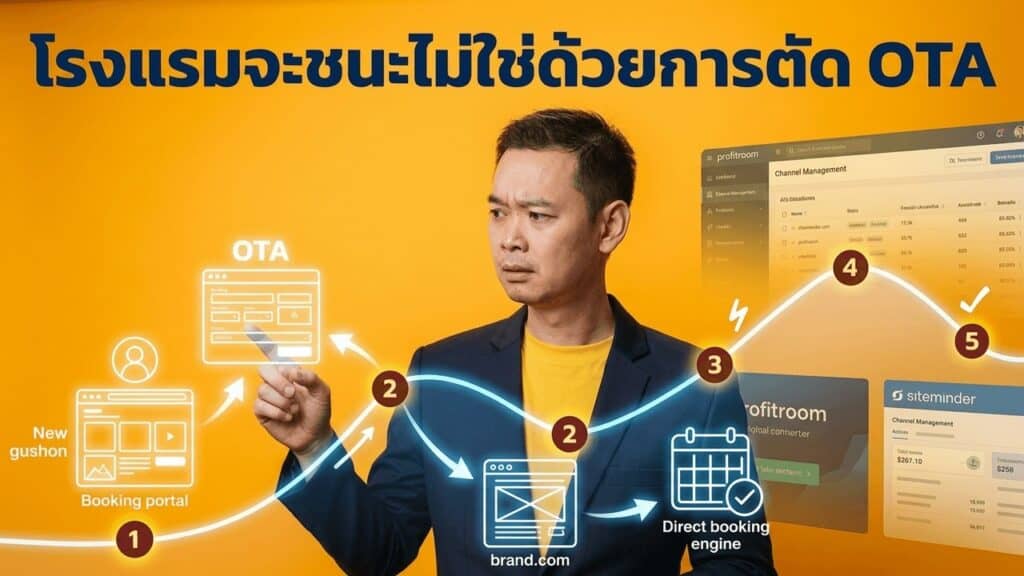
Direct Booking Tug-of-War: โรงแรมไทยชนะ OTA ด้วยการแยกบทบาท Channel ไม่ใช่ตัด
ทำไม Chatrium ใช้ทั้ง Profitroom + SiteMinder ใน chain เดียว — และ Math ของการลด OTA share จาก 70% → 50% ใน 12 เดือนทำงานได้แค่บางขนาด
- Skift รายงาน 27 พ.ค. 2026 ว่า OTA ครอง gross booking $266B vs direct $262B ในปี 2024 — hotelier survey อยากย้าย OTA 25% → 13% direct 25% → 42% เพราะ direct cost 4.5% เทียบ OTA 17-20%
- Chatrium Hotels (chain ไทย HQ Bangkok 8 properties) ขยาย Profitroom integration เพื่อ Direct Booking ขณะที่ยังใช้ SiteMinder สำหรับ OTA — ไม่ใช่ choose-your-side แต่แยกบทบาท
- สำหรับโรงแรม independent ไทย — Direct Booking effective cost จริง 8-15% (ไม่ใช่ 4.5%) เพราะรวม brand.com marketing + loyalty + tech maintenance ต้อง audit ก่อนกระโดด
Skift รายงาน 27 พฤษภาคม 2026 ใน “Direct Booking Tug-of-War: Hotels’ Long Bid to Take Back Power” ว่า OTA ครอง gross booking ที่ 266 พันล้าน USD เทียบ direct channel ที่ 262 พันล้าน USD ในปี 2024 และ Forecast ว่า direct (digital) channel มีโอกาสแซง OTA กลับเป็น dominant ภายในปี 2030 — ในฝั่ง hotelier survey ที่ Skift ทำ ผู้ตอบอยากย้าย Channel Mix จาก OTA 25% → 13% และเพิ่ม direct digital จาก 25% → 42% เพราะ direct cost เฉลี่ยอยู่ที่ 4.5% เทียบ OTA commission 17-20% ตามที่ Cloudbeds + The Percentage Asia รายงาน
เรื่องที่ผมสนใจไม่ใช่ตัวเลข survey — แต่คือ gap ระหว่าง ideal vs achievable ที่ Skift ไม่ได้ขยี้ ในปฏิบัติจริง โรงแรม independent ไทย 40-100 ห้องส่วนใหญ่ทำตัวเลข OTA 13% ไม่ได้ในระยะ 12 เดือน เพราะ Direct Booking cost จริง ≠ 4.5% — ต้องบวก Booking Engine subscription + brand.com SEO + Google Ads + retargeting + email marketing + loyalty system + payment gateway รวมแล้ว effective cost อยู่ที่ 8-15% ของ revenue ใน chain ที่ไม่มี loyalty scale ของ Marriott Bonvoy หรือ Hilton Honors — Chatrium Hotels chain ไทยที่มี 8 properties + Profitroom + SiteMinder integration ใช้ framework ของการ “แยกบทบาท channel” แทน “ลด OTA share” ซึ่งเป็น mental model ที่โรงแรม independent ไทยทำตามได้ง่ายกว่า
▍ Skift Survey vs Reality: ทำไม Gap ระหว่าง Ideal vs Achievable ใหญ่กว่าที่ Hotelier คิด?
Skift “Direct Booking Tug-of-War” 27 พฤษภาคม 2026 เน้น 3 trend หลัก — ตัวแรก OTA ครอง gross booking 266 พันล้าน USD เพิ่งแซง direct 262 พันล้าน USD ในปี 2024 ตัวที่สอง chain ใหญ่ (Marriott, Hilton, IHG) ใช้ทศวรรษ build loyalty program จน 60-70% ของ Direct Booking มาจาก loyalty member พร้อมลด OTA commission ผ่าน contract renegotiation 1-3 ppt ใน 5 ปี ตัวที่สาม AI booking agent (ChatGPT, Google Agent Mode) กำลังจะเปลี่ยน distribution landscape ในอีก 3-5 ปี
ส่วนที่ Skift ไม่ได้ขยี้แต่สำคัญสำหรับโรงแรมไทย — direct cost 4.5% ที่ survey อ้างมาจาก chain ใหญ่ที่ amortize tech stack + loyalty + brand marketing ข้าม 500-9,000 properties ทำให้ marginal cost ของ Direct Booking ใน 1 hotel ต่ำมาก สำหรับ independent ไทยที่มี 40-100 ห้องเดียว — Direct Booking platform license 8,000-30,000 USD/year + brand.com SEO 50,000-200,000 THB/year + Google Ads retargeting 100,000-500,000 THB/year + loyalty system 5-15 USD/active member/year + payment gateway 2-3% = effective cost Direct Booking ขยับขึ้น 8-15% ของ revenue
ตัวเลข OTA commission 17-20% ที่ The Percentage Asia + Cloudbeds รายงานก็เป็น headline rate — Booking.com Genius lower-rate program ลดอีก 4-7% สำหรับ chain ใหญ่, Agoda promotion stack เพิ่ม commission 2-5% สำหรับ visibility, payment processing 2-3% — ทำให้ effective commission ที่โรงแรมรับจริงต่ำกว่า list rate ดังนั้น Gap จริงระหว่าง direct vs OTA สำหรับ independent ไทยไม่ใช่ 13% vs 17.5% (4.5 ppt) — แต่อาจเป็น 8-15% vs 14-22% (อาจ ovarlap)
💡 BoydWee เห็นว่า — แยกบทบาท: OTA = Acquisition, Direct = Retention, Brand.com = Trust Signal
เคยมีช่วงที่โรงแรมไทยคิดว่า Direct Booking war = zero-sum: OTA ทุก booking ที่ลดได้ = direct ที่เพิ่มได้ ตัวเลข Skift “OTA 25% → 13%, direct 25% → 42%” ยิ่ง reinforce mental model นี้ ปัญหาคือ guest journey จริงไม่ได้เป็นแบบ zero-sum — Phocuswright + Google Travel research ระบุว่า leisure traveler 60-70% เปิด OTA ก่อนเสมอเพื่อ research ในขั้น discovery จากนั้น 20-30% กลับมาที่ brand.com เพื่อ verify + compare amenity + check direct rate และ 30-40% ของ guest ที่ stay 2 ครั้งขึ้นไปกับ chain เดียวกันจะ book ตรงผ่าน brand.com ในครั้งหลัง
นี่แปลว่าแต่ละ channel มีบทบาทคนละบทบาทใน journey — OTA = new customer acquisition โดยเฉพาะจาก Source Market ที่ brand.com reach ไม่ถึง (Booking.com strong ใน Europe + Long-haul, Agoda strong ใน APAC) Direct = repeat guest retention + loyalty + upsell + lifetime value Brand.com = trust signal ที่ทำให้ guest กลับมา book ผ่าน OTA ในที่สุดก็ยัง — ถ้า ignore brand.com presence ทั้งหมด conversion ใน OTA จะลด เพราะ guest ไม่เห็น brand authority Chatrium ใช้ Profitroom สำหรับ direct + SiteMinder สำหรับ OTA — เพราะ chain เข้าใจว่า 2 channel มี role ต่างกัน ไม่ใช่ “ตัด OTA ทิ้งให้ได้มากที่สุด”
โรงแรมไทยจะชนะ Direct Booking war ไม่ใช่ด้วยการตัด OTA — แต่ด้วยการเข้าใจว่า OTA, brand.com, Direct Booking platform มีบทบาทต่างกันใน guest journey และ allocate cost ตามบทบาทนั้น
▍ Audience Impact — Direct Booking Strategy สำหรับโรงแรมไทยใน 3 หน้าต่างเวลา
⏱ 3-6 เดือน: โรงแรมไทย independent ควรเริ่มจาก Direct Booking platform หรือ optimize OTA ก่อน?
ใน 3-6 เดือนแรกโรงแรม independent ไทย 40-100 ห้องที่มี OTA 60-75% ของ revenue ควรเริ่มจาก optimize OTA ก่อน ไม่ใช่กระโดดไปลงทุน Direct Booking platform เพราะ direct cost จริงไม่ใช่ 4.5% ที่ Skift survey อ้าง — Booking Engine 2-5 USD ต่อห้องต่อเดือน + brand.com SEO + Google Ads + retargeting + email marketing + loyalty system + payment gateway รวมแล้วโรงแรม independent ใช้ effective cost Direct Booking 8-15% ของ revenue เริ่มจาก audit OTA ปัจจุบัน — ขอ commercial review จาก Booking.com partner manager เพื่อ negotiate Genius enrolment + tier reduction, ขอ Agoda promotion stack analysis เพื่อตัด program ที่ ROI ต่ำ, ลด Rate Parity error ที่ทำให้โดน penalty ส่วนใหญ่ลด commission ได้ 1-3 ppt ผ่าน contract optimization ก่อนค่อยลงทุน direct platform — ขั้นนี้ใช้เวลา 2-3 เดือน + cost ต่ำมาก เป็น quick win ก่อน commit ทรัพยากร
📅 6-12 เดือน: Chatrium + Profitroom case ใช้ framework ไหนสำหรับ chain ไทย?
Chatrium Hotels & Residences (chain ไทย HQ Bangkok 8 properties ใน Thailand, Myanmar, Japan) ขยาย Profitroom integration ตามรายงาน Travel & Tour World 2026 — รวม Booking Engine, CRM, loyalty solution, guest engagement ใน unified ecosystem ผ่าน Profitroom ขณะที่ใช้ SiteMinder เป็น Channel Manager สำหรับ Booking.com + Agoda + Expedia + GDS distribution Hotel Tech Report case study ระบุว่า Chatrium revolutionise operation ผ่าน SiteMinder ตั้งแต่ก่อนหน้านี้ — และ Travel & Tour World รายงานว่า Profitroom integration ทำให้ conversion performance, transaction value, guest engagement เพิ่มภายใน 12 เดือน (vendor claim ไม่ระบุตัวเลขแม่นยำใน public source) สิ่งที่โรงแรมไทยเรียนรู้ได้คือ framework — แยก vendor ตามบทบาท Profitroom = direct experience + loyalty + brand consistency, SiteMinder = OTA reach + new acquisition + GDS — ไม่ใช่เลือก vendor เดียวที่ “ทำทุกอย่าง” สำหรับ chain ไทย 3-10 properties = good fit; สำหรับ independent 1 property = ราคา 2-vendor stack อาจสูงเกินเทียบกับขนาด revenue ต้องคำนวณ effective cost per booking ก่อน decide
🔭 2-3 ปี: ถ้า AI booking + Airbnb hotels เข้ามา Direct Booking strategy จะเปลี่ยนยังไง?
ภายใน 2028-2029 ถ้า AI booking agent (ChatGPT app, Google Agent Mode, Perplexity) + Airbnb’s APAC hotel push สำเร็จในการ build supply integration กับ CM ของโรงแรมไทย — definition ของ Direct Booking จะกระจาย ขณะที่ Booking.com + Agoda จะ defend share ด้วยการลด commission สำหรับ boutique Segment + เพิ่ม loyalty incentive โรงแรมไทยที่จะ thrive ในปี 2029 น่าจะมีโครงสร้างชัดเจน 3 layer — (1) brand.com + Booking Engine ของตัวเอง (4-6% effective cost ถ้า scale หรือ 8-15% ถ้า independent) สำหรับ repeat guest + loyalty (2) OTA traditional (Booking.com + Agoda + Expedia) สำหรับ new customer acquisition จาก long-haul Source Market (3) emerging channel เช่น Airbnb + AI booking agent สำหรับ niche Segment + design-led property — โรงแรมที่ยังคิดว่าต้อง choose-your-side จะ inflexible เมื่อ landscape เปลี่ยน เริ่มคิดเป็น role-based mental model ตั้งแต่ตอนนี้ จะลดต้นทุน reorganize ใน 2-3 ปีข้างหน้า
▍ Reason-Why — Math ของ Channel Mix Optimization (scenario range)
ก่อนเข้า number — disclaim ก่อนว่านี่คือ scenario range บน public benchmark + vendor pricing list ไม่ใช่ deal-specific OTA commission rate 17.5% มาจาก Cloudbeds OTA Commission Guide 2026 + The Percentage Asia Direct Booking cost 4.5% มาจาก Skift Direct Booking Tug-of-War 27 พฤษภาคม 2026 — แต่นี่คือ chain average Direct Booking cost ของ independent อยู่ที่ 8-15% ตาม Hotel Tech Report benchmark + vendor pricing list ของ Profitroom, Cloudbeds, SiteHobby, Hotelchamp
3 ตัวขับเคลื่อนตัดสินใจ direct vs OTA mix ตัวแรก — repeat guest %: ถ้า > 30% ของ revenue มาจาก guest ที่กลับมา 2+ ครั้ง = candidate ที่ดีสำหรับ loyalty program + Direct Booking investment ถ้า < 15% = brand power ยังไม่พอที่จะ build direct economically ตัวที่สอง — source market overlap: ถ้า > 70% ของ guest มาจาก 2-3 country (เช่น China + Korea + Singapore) = ปกติ Agoda + brand.com ก็พอแล้ว ไม่จำเป็นต้องลงทุน multi-OTA stack ใหญ่ ถ้า diverse 8-15 country = OTA หลายราย + brand multi-language จำเป็น ตัวที่สาม — ADR tier: ถ้า ADR > THB 6,000 = direct cost amortize ง่ายขึ้น + loyalty member retention rate สูงกว่า ถ้า ADR < THB 2,500 = OTA volume + commission optimization สำคัญกว่า direct investment
ปกติ chain 5-15 property เริ่มเห็น Direct Booking economics ทำงานใน 18-30 เดือน — สำหรับ single property independent อาจใช้เวลา 36-60 เดือน หรือไม่ achievable เลยถ้าไม่ scale
📊 Scenario Math — โรงแรม Independent 80 ห้อง vs Chain ไทย 5 Property: Direct Investment Math
สมมติฐาน scenario 1: Single property 80 ห้อง × 70% Occupancy × THB 3,800 ADR = baseline annual revenue THB 77.7 ล้าน — scenario 2: Chain 5 property × 75 ห้อง average × 70% × THB 4,200 = THB 402 ล้าน — ทั้ง 2 ลงทุน Direct Booking platform เต็มที่
— Chain ไทย 5 property amortize tech + brand ข้าม property —
ตัวเลขทั้งหมดเป็น scenario สมมติฐานบน public benchmark + vendor pricing list ไม่ใช่ measured outcome ของ Chatrium specifically สาเหตุที่ chain economics ทำงานดีกว่า single property = (a) tech stack amortize ข้าม property (b) brand marketing budget shared (c) loyalty member ใช้ point ข้าม property = retention สูงกว่า single brand (d) negotiation leverage กับ vendor ใหญ่กว่า — independent ที่ scale ไม่ถึงควร focus OTA optimization + selective direct เฉพาะ guest Segment ที่ defensible (เช่น corporate, repeat business traveler) ก่อน commit direct platform เต็ม
▍ สัปดาห์นี้ทำอะไรได้บ้าง
🎯 30-Second Self-Test
- โรงแรมคุณรู้ effective cost ของแต่ละ channel หรือเปล่า — Booking.com commission % + payment processing + Genius discount = effective รายจริงเท่าไหร่?
- Direct Booking ของคุณรวม Booking Engine subscription + brand.com SEO + Google Ads + retargeting + email + loyalty + payment ปีละเท่าไหร่ — รู้ effective cost หรือเปล่า?
- Repeat guest % ของคุณคือกี่ % ของ annual revenue — > 30% = candidate ที่ดีสำหรับ direct investment, < 15% = brand power ยังไม่พอ
- คุณเป็น independent 1 property หรือ chain 3-10 property — chain economics ของ Direct Booking ทำงานต่างกันมาก เคยคำนวณ amortization scale หรือเปล่า?
⚡ ประโยชน์สำหรับโรงแรมไทย — Action 3 ขั้น เริ่มได้สัปดาห์นี้
- Calculate effective cost ของแต่ละ channel — ไม่ใช่แค่ commission rate: OTA commission rate ที่ Booking.com แสดง = 17.5% แต่ effective cost ต่อโรงแรมรวม payment processing 2-3% + cancellation handling + lower-rate Genius discount ทำให้ effective อยู่ที่ 19-22% Direct Booking ที่หลายคนคิดว่า 4.5% ตาม Skift survey จริงๆ ต้องบวก Booking Engine 2-5 USD/ห้อง/เดือน + brand.com marketing (SEO, Google Ads, retargeting) + email marketing + loyalty system maintenance + payment gateway 2-3% — effective อยู่ที่ 8-15% สำหรับโรงแรม independent ทำตาราง 3 column (Channel / Effective Cost Range / Customer Acquisition Quality) เพื่อเทียบ apples-to-apples
- Allocate role ของแต่ละ channel — ไม่ใช่ผลรวมเดียวกัน: OTA role = new customer acquisition จาก Source Market ที่เรา reach ไม่ได้ direct (Booking.com strong ใน Europe + Long-haul, Agoda strong ใน APAC + China-Korea-Japan-Singapore-Malaysia) — ยอม commission สูงเพื่อ acquire customer ใหม่ Direct role = repeat guest + loyalty retention + brand experience + upsell โดยวัด lifetime value ไม่ใช่แค่ first-booking margin Brand.com role = trust signal สำหรับ customer ที่ research จาก OTA แล้วกลับมา compare บน brand site ก่อน book — แม้จะ book ผ่าน OTA สุดท้าย brand.com ยังทำหน้าที่ stage หนึ่งใน journey Chatrium ใช้ Profitroom สำหรับ direct + SiteMinder สำหรับ OTA distribution — แยกบทบาท ไม่แข่งกัน
- Set target Channel Mix ตาม role + property tier ไม่ใช่ตาม ideal-survey: Skift survey อยาก OTA 13% / Direct digital 42% แต่นี่คือ ideal ของ chain ใหญ่ที่มี loyalty program scale Marriott Bonvoy 230M+ member สำหรับโรงแรม independent ไทย 40-100 ห้องที่ไม่มี loyalty scale realistic target อาจเป็น OTA 50-60% / Brand direct 25-35% / Walk-in + corporate 10-15% โดยมี trajectory ลด OTA 2-4 ppt/year ผ่าน loyalty + brand marketing scale ไม่ใช่ก้าวกระโดด — ลด OTA 70% → 50% ใน 12 เดือนเป็น scenario ที่ทำงานได้แค่บางขนาด (chain ขนาดกลาง 5-15 property มี shared brand marketing budget) ไม่ใช่ทุกโรงแรม
(ราคา Booking Engine + direct platform license เปลี่ยนได้ตาม property size + contract term ตัวเลขในบทความเป็น public benchmark range จาก Skift Direct Booking Tug-of-War 2026 + Cloudbeds OTA Commission Guide + Hotel Tech Report Chatrium case study + Travel & Tour World Profitroom integration report ไม่ใช่ deal-specific ขอ quote ตรงจาก vendor + commercial review ของ OTA partner manager เสมอ)
กลับมาที่คำถามต้นเรื่อง — Direct Booking tug-of-war ไม่ใช่ war ที่โรงแรมต้องเลือกข้าง OTA vs direct อย่างใดอย่างหนึ่ง แต่คือ allocation problem ที่แต่ละ channel มีบทบาทใน guest journey ต่างกัน
คำถามสำหรับโรงแรมไทยไม่ใช่ “ตัด OTA ให้เหลือ 13%” — แต่คือ “OTA, brand.com, Direct Booking platform แต่ละ channel มี effective cost เท่าไหร่ และทำหน้าที่ดึง customer แบบไหน” Chatrium ตอบคำถามนี้ด้วย Profitroom + SiteMinder integration เพราะเข้าใจว่า 2 vendor มี role ต่างกัน — โรงแรมไทยที่ไม่มี scale ของ chain ควรเริ่มจาก audit effective cost + role ของ channel ก่อน decide ลงทุน ไม่ใช่ตัด OTA ตาม survey headline
🤝 อยากลองคิดด้วยกัน?
เรื่อง Direct Booking strategy สำหรับโรงแรม independent ไทยมี nuance เยอะมาก — บางที่มี repeat guest % สูงพอที่จะ build Direct Booking platform ได้คุ้ม แต่ ADR ยังต่ำเกินที่จะ amortize tech cost บางที่เป็น chain 3-5 property ที่เพิ่งคิดจะรวม brand marketing budget แต่ยังไม่มี loyalty system บางที่ optimize OTA แล้วลด commission ได้ 2-3 ppt ไม่อยากกระโดดไป direct ตอนนี้ บางที่เป็น corporate-heavy property ที่ OTA reach ไม่ตรงกับ guest profile ผมเขียนจากมุมมองทั่วไป — คุณรู้รายละเอียดของ guest mix + repeat rate + tech stack ปัจจุบันของโรงแรมคุณดีกว่า scenario ในบทความ